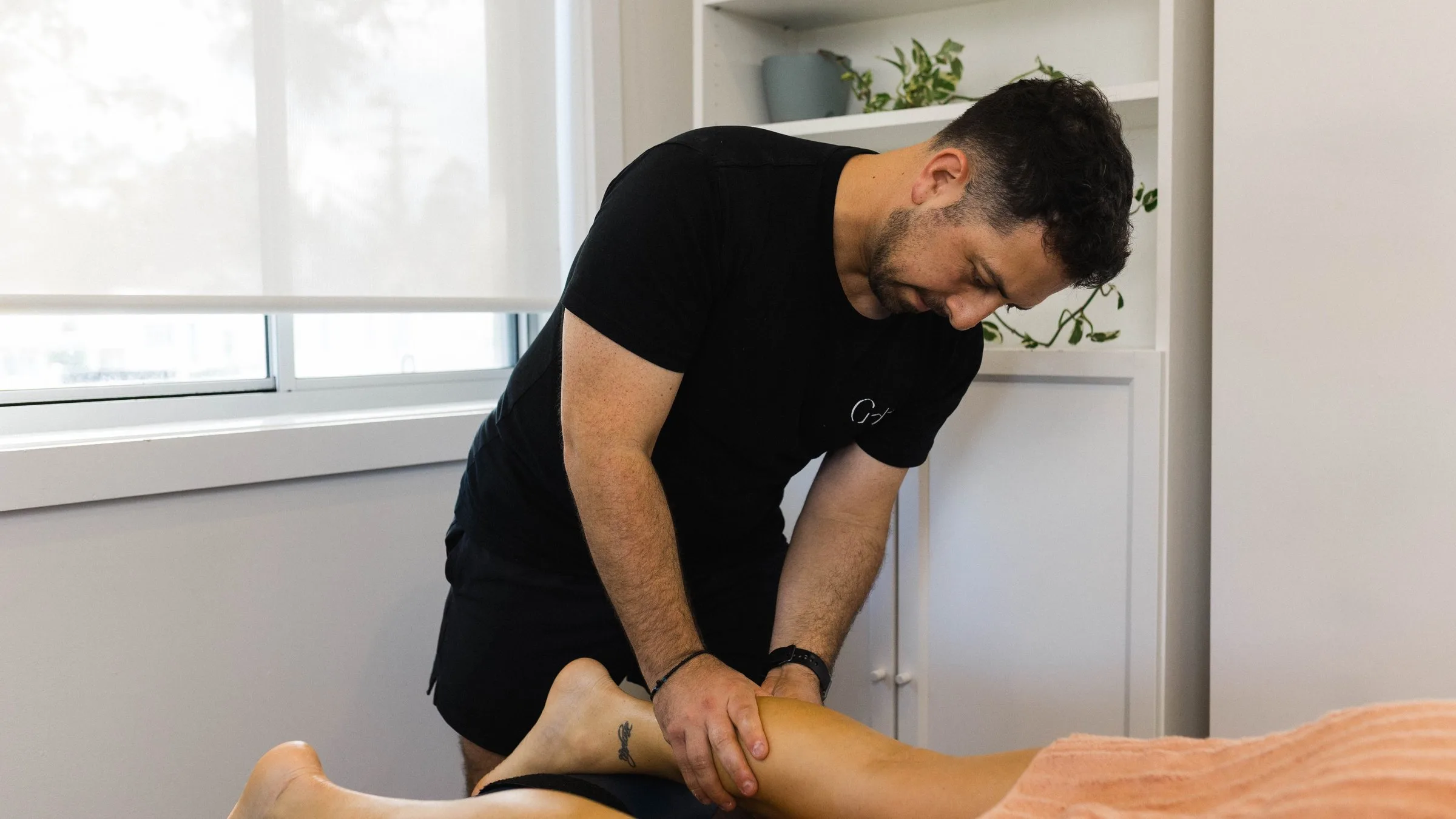
Top Exercises Physiotherapists Recommend for Knee Pain
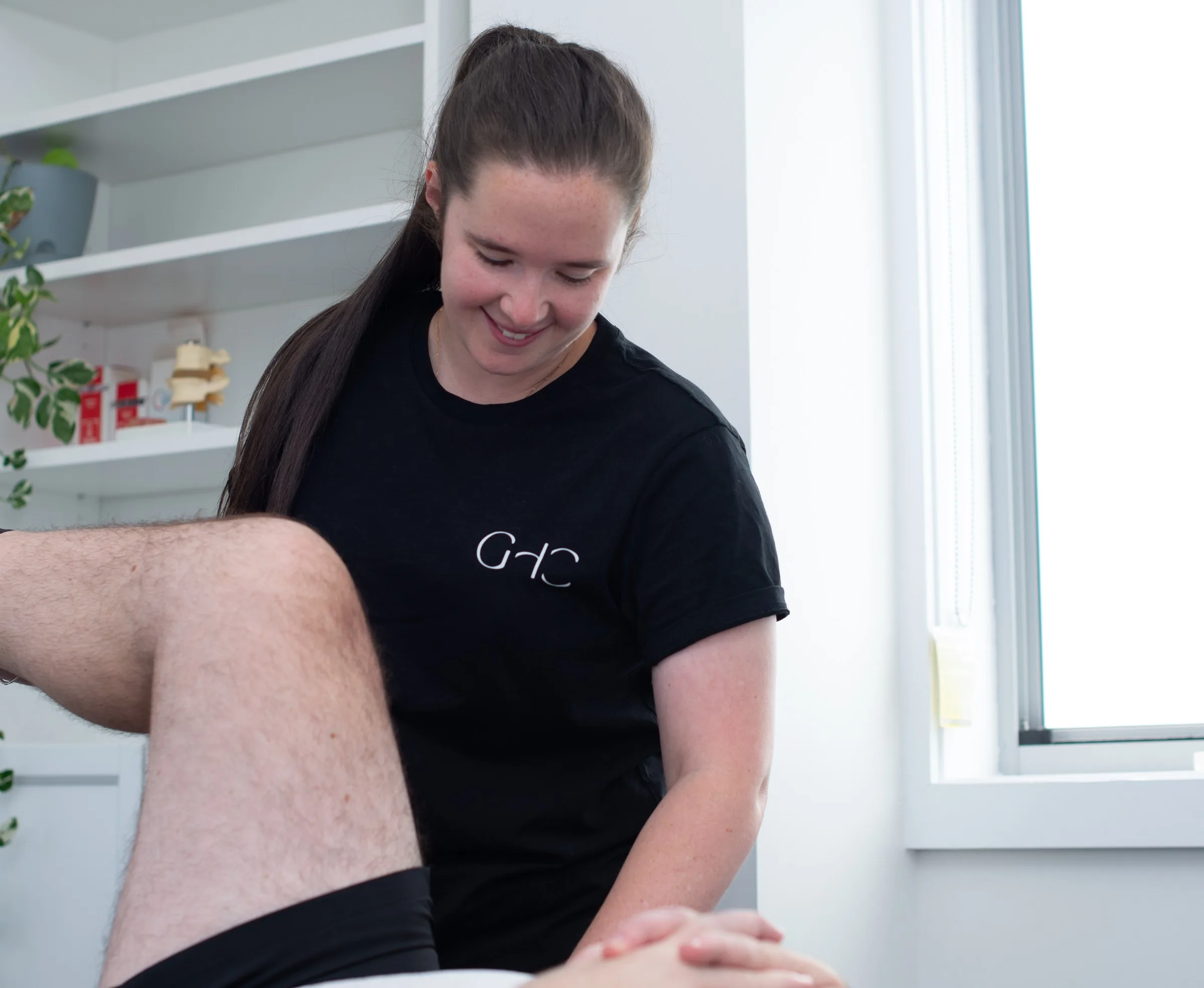
“Should I rest my knee or keep exercising it?” It is the question we hear most from people with a sore knee, and for most knees the honest answer is that complete rest rarely fixes anything. Carefully chosen exercise, built up gradually, is one of the most reliable tools we have.
That does not mean any exercise will do. The wrong movement at the wrong time can keep a knee irritated for months. Below, we cover the main categories of exercise we use for knee pain, why they work, and how to tell whether your knee needs a proper look before you start.
Who Gets Knee Pain, and What It Feels Like
We see knee pain in almost every kind of person who walks through the door. Runners who added distance too quickly, gym goers, tradies who spend the day kneeling and climbing, desk workers who sit for hours and then play weekend sport, and people in their 50s and beyond whose knees have started to feel stiff and cranky. There is no single type, which is part of why treatment has to be tailored.
Most people describe a dull ache around or behind the kneecap, or along the inner or outer edge of the joint. Stairs, standing up from a chair, and the first few steps after sitting for a while are classic triggers. Some also notice morning stiffness that eases once they get moving, or a sense that the knee is not quite trustworthy on uneven ground.
Clicking or grinding on its own is very common and not a reason to panic. It matters more when it comes with pain, swelling, or the knee catching.
What Is Actually Going On in a Sore Knee
Knee pain is rarely caused by one thing. The knee is a hinge that sits between the hip and the foot, so it inherits the consequences of whatever is happening above and below it. These are the patterns we see most.
Pain Around the Kneecap
Pain around the kneecap, usually called patellofemoral pain, comes from where the kneecap (the patella) glides over the groove at the end of the thigh bone. It often appears after a jump in load, such as a new running program or a stretch of heavy stair climbing. An international expert consensus on patellofemoral pain supports exercise therapy for it, especially a combination of exercises aimed at the hips and at the knee.
Joint Changes Linked to Osteoarthritis
Osteoarthritis is a common joint condition where the cartilage (the smooth, slippery lining of the joint) and the tissues around it change over time. “Wear and tear” is an outdated way to describe it, because the joint is living tissue that responds to how you use it.
The RACGP guideline for GPs recommends that everyone with knee osteoarthritis be offered exercise done on land to ease pain and improve function, whatever their age, what their imaging shows, or how sore they are.
Irritated Tendons
The patellar tendon connects the kneecap to the shin bone, and the quadriceps tendon connects the front thigh muscle to the kneecap. When either is asked to do more than it has been prepared for, it becomes sore, typically at the start of activity, easing as you warm up, then aching again afterwards. Tendons often do better with progressive loading than with rest alone, which is why exercise sits at the centre of treatment.
Meniscus Irritation
The menisci are two rubbery cushions of cartilage that sit between the thigh bone and the shin bone. Twisting injuries can tear them, but so can ordinary ageing, often without any pain. When a meniscus is irritated, people usually notice a deep ache along the joint line or an occasional catching sensation.
Muscles That Are Underprepared
The thigh muscles, the glutes (buttock muscles), and the calf act as shock absorbers for the knee. When they are weak, out of condition, or simply not used to your current activity level, the knee absorbs more of the load. This is the cause we can change most reliably, which is why strengthening features so heavily in a plan.
There is a caveat. Sometimes testing shows the muscles are perfectly strong and the real problem is that activity rose faster than the tissue could adapt. That calls for pacing, not just more strengthening, and it is one of the things a proper assessment picks up.
What Knee Pain Is Often Mistaken For
Pain felt in the knee does not always start in the knee. A problem in the hip can send pain to the knee, which is especially easy to miss in younger people. Irritation of a nerve in the lower back can do the same. Pain on the outside of a runner’s knee is often blamed on the joint when the tissue involved is the band of connective tissue running down the outer thigh (the iliotibial band).
A hot, swollen knee can also come from an inflammatory condition such as gout, which needs medical care rather than exercise. This is why we examine the hip, lower back, and foot as well as the knee, and why we do not like guessing from a description alone.
Red Flags: When to Get Medical Care Urgently
Most knee pain is mechanical and manageable. The signs below are not, so please seek urgent care before starting any exercise program. See a GP or urgent care clinic promptly, go to your nearest emergency department, and call 000 if you have chest pain or trouble breathing.
- A knee that is hot, red, and swollen, especially with a fever or feeling generally unwell
- An injury after which you cannot put weight on the leg, the knee looks out of shape, or it swelled up within hours
- A knee that locks and will not fully straighten, or that repeatedly gives way
- Calf pain with swelling and warmth, particularly after surgery, a long flight, or a period of immobility (this can signal a blood clot)
- Numbness, pins and needles, or weakness spreading into the leg, or any change in bladder or bowel control
- Constant pain that is severe at night and unrelated to movement, or unexplained weight loss alongside knee pain
If any of these apply, see a doctor first. We are always glad to work alongside your GP afterwards.
What to Do in the Short Term
If your knee is sore but none of the red flags above apply, these steps are generally reasonable while you wait for an appointment.
- Reduce, but do not stop. Cut back the activities that clearly flare it up and keep gentle movement going, such as short walks on flat ground.
- Keep the knee moving. Bend and straighten it through a comfortable range several times a day so it does not stiffen.
- Break up sitting. Stand and walk for a minute or two every half hour or so.
- Pause the big aggravators. Hold off on deep kneeling, repeated deep bending, and running on hills until you know what is driving the pain.
- Use warmth if it helps. A warm pack can ease an aching knee, though it will not fix the cause.
- Ask about pain relief. Speak to your pharmacist or GP about medicines, as they are not suitable for everyone.
- Back off if it worsens. Sharp pain or a knee that swells after activity means you have done too much for now.
How We Treat Knee Pain
Our approach is to find the cause first, then treat the knee and whatever is feeding into it. You do not need a referral to see our physiotherapist, and treatment starts in your first session.
The Initial Assessment
We start with your story: when it began, what changed in your training or work beforehand, what aggravates it, and what you have already tried. Then we examine the knee, hip, ankle, and lower back, test strength and control, and watch how you move through everyday tasks such as stepping, bending, and getting up from a chair. The aim is a clear picture of what is driving your pain and a plan you understand.
Manual Therapy
Manual treatment can include soft tissue work to ease tight muscles, dry needling for stubborn muscle tension, and joint mobilisation (gentle, controlled movements applied to a joint) when stiffness is limiting movement. These can make movement more comfortable and give you a window to exercise.
They are the supporting act, though. For pain around the kneecap, the consensus mentioned earlier does not support mobilisation on its own, and the lasting change comes from the exercises below.
The Exercises Physiotherapists Recommend
This is the part most people are searching for. A good knee program is usually a handful of well targeted exercises, not a long printed sheet, and it draws on the categories below. We deliberately do not publish sets and reps, because the right dose depends on your knee, your history, and how it is behaving this week. You can read more about how we use exercise rehab alongside manual treatment.
Strengthening the thigh muscles. The quadriceps (front of the thigh) and hamstrings (back of the thigh) carry much of the load through the knee. We typically use exercises where you bend and straighten the knee against your body weight or light resistance, slowly and under control, then increase the load as the knee tolerates it. For most knee problems, this category is the backbone of the plan.
Strengthening the hips. Strong glutes and hip muscles help control how the thigh and knee line up when you walk, climb, or land. As noted earlier, the strongest support for pain around the kneecap is for combining hip and knee exercises rather than choosing one.
Building the calf and foot. The calf helps absorb force with every step and is often overlooked. Exercises that load it through a controlled range, and that build the small muscles of the foot, take pressure off the joint above.
Practising everyday movements. Once strength is building, we retrain the movements that actually hurt, such as rising from a chair, stepping up and down, and bending to pick something up. Rehearsing them with good control, and gradually raising the demand, bridges the gap between gym style strength and real life.
Balance and control. Exercises that challenge your balance, and how well the knee tracks over the foot, train the muscles to react quickly on uneven ground. They matter most when a knee has felt unreliable after an injury, and for older adults who want to lower their risk of falls.
Conditioning that is gentle on the joints. Walking, cycling, and exercise in water build fitness without much impact. The Australian GP guideline strongly recommends muscle strengthening, walking, and Tai Chi for knee osteoarthritis, and suggests stationary cycling, Hatha yoga, or exercise in water may suit some people.
Mobility work. Gentle range of motion work for the knee, hip, and calf can ease stiffness. It helps, but stretching on its own rarely resolves knee pain.
One more nuance worth knowing: some discomfort while you exercise is expected and does not mean you are damaging the knee. Mild to moderate discomfort that settles within a day is generally acceptable. Sharp pain, swelling afterwards, or soreness that is worse the next morning tells us the dose is too high, and we adjust it. Treat it as feedback, not failure.
A Realistic Recovery Timeline
Your physiotherapist will give you an estimated plan at your first appointment, because every knee is different. As a rough guide, recovery tends to unfold in three phases.
Weeks 1 to 2: settle and start. We calm the irritated tissue with manual treatment, adjust your activity, and begin gentle exercises you can do at home with little or no equipment. Early relief is common, but it is mostly the knee calming down rather than getting stronger.
Weeks 3 to 6: build. Strength and control work becomes the focus, with the load rising as the knee allows. Stairs and standing up from a chair usually start to feel easier here.
Weeks 6 to 12 and beyond: return to what you love. We progress towards the demands of your sport, job, or hobbies. Tendon problems and long standing osteoarthritis often need a longer runway, because tissue builds its capacity slowly.
Do You Need a Scan or Surgery?
In most cases, no. Knee pain can usually be assessed from your history, a physical examination, and movement testing. Scans can also be misleading. In a study of 710 adults over 50 whose standard knee imaging showed no sign of osteoarthritis, MRI still found some kind of abnormality in 89 percent of them, at similar rates in knees that were not painful.
A finding on a scan is not automatically the cause of your pain. Imaging does have a place, such as after a significant injury, when red flags are present, or when symptoms have not responded to a good trial of treatment, and we will refer you if it is needed.
Surgery is generally reserved for specific injuries, or for knees that have not improved after a proper course of care without surgery. That decision sits with your GP or a specialist.
Keeping Your Knees Working for the Long Run
Most knee pain returns for the same reason it arrived: the load went up and the knee’s capacity did not. Once symptoms settle, the most useful thing you can do is keep a small amount of strength work going and build activity up gradually. Think in weeks, not days, when increasing distance, hills, or weights.
Some people also benefit from looking beyond the knee. Our podiatrists can assess footwear and foot mechanics when they look relevant, and the same guideline strongly recommends weight management for people with knee osteoarthritis who carry extra weight, which we can talk through respectfully if it applies to you.
If your knee has been nagging at you, or you are not sure which type of exercise suits it, a proper assessment is the quickest way to stop guessing. Book an assessment with our physiotherapist at Gladesville Healthcare, and we will work out what is driving your pain and build a plan around it. You can also call us on (02) 9816 3071.
Frequently Asked Questions
Should I rest a sore knee or keep exercising?
For most knees, keep moving in a comfortable way. Complete rest tends to weaken the muscles that protect the joint. The exception is when red flags are present, which need medical care first.
How long until exercises help?
Some people feel better within a couple of weeks as irritation settles, but real strength gains take longer. As a rough guide, many straightforward cases improve over 6 to 12 weeks, while tendon problems and long standing arthritis often need more time.
Is it normal for exercises to hurt a little?
Mild to moderate discomfort that settles within a day is generally acceptable. Sharp pain, swelling, or soreness that is worse the next morning means the load needs adjusting, so tell your physiotherapist.
Will exercise make my arthritis worse?
Australian GP guidance recommends exercise for knee osteoarthritis whatever your age, imaging findings, or pain level. At the right dose, it is a treatment rather than a risk.
Are squats bad for my knees?
Not inherently. Bending the knee under load is a normal part of strengthening. Problems tend to arise when depth, load, or volume climbs faster than the knee can handle, so the dose matters more than the movement.
Do I need a referral or a scan to see a physio?
No referral is needed, and most knees can be assessed without imaging. If your history or examination points to a scan, we will tell you and arrange the referral.
This article is general information only and is not a substitute for personal medical advice. If you are unsure about your symptoms, please speak with your GP or another qualified health professional.