Whiplash Recovery: Chiropractic Strategies That Work
“I only got rear ended at a set of lights. Why does my neck feel like this three days later?” We hear that question constantly, and it is a fair one. Whiplash often feels like nothing at the scene, then the stiffness, headaches and deep ache arrive a day or two afterwards.
Recovery usually comes down to four things: honest reassurance, early movement, targeted strengthening, and manual care that supports the first three rather than replacing them. This post explains why, what we do at each stage, and which signs mean you should see a doctor before anyone touches your neck.
Who Gets Whiplash, and What It Feels Like
Whiplash is a rapid back and forth movement of the head and neck that strains the soft tissues (muscles, ligaments, joint capsules and discs). Clinicians group the resulting problems under the term whiplash associated disorders. It is the most common injury after car crashes that are not catastrophic, but we also see it from sporting collisions, falls, and bike or scooter accidents.
The pattern we see most is a sore, stiff neck that is hard to turn, often with a headache at the base of the skull and tight shoulders. Some people also notice dizziness, jaw ache, poor sleep, trouble concentrating, or tingling in the arms. Symptoms frequently arrive late, which catches people out and leads many to wait longer than they should before getting checked.
What Is Actually Going On in the Neck
Whiplash is not one injury. The sudden movement can irritate several structures at once, which is why two people in the same crash can feel quite different.
Strained Muscles and Tendons
The muscles at the back and sides of the neck are stretched faster than they can protect themselves. They tighten into guarding, which feels like a rope across the neck and shoulders. The deeper stabilising muscles, which hold the neck steady during everyday movement, can also become sore and slow to switch on.
Irritated Facet Joints
Facet joints are the small paired joints at the back of each neck vertebra. When their capsules are sprained, you typically feel a one sided ache that sharpens when you look over your shoulder or tilt your head back. This is one of the most common reasons turning the head becomes so limited.
Headaches From the Upper Neck
The joints and muscles at the top of the neck can refer pain into the head. These are called cervicogenic headaches (headaches that originate in the neck). They usually start at the base of the skull and creep towards the forehead or behind one eye, and they often settle only once the neck itself calms down.
Irritated Nerve Roots
Nerve roots are the branches that leave the spinal cord and travel into the arms. If one is irritated, you may feel arm pain, pins and needles, or weakness, a pattern known as cervical radiculopathy. It is the less common picture: data from NSW cited in the technical report on diagnosis behind the Australian guidelines put it at fewer than 5 percent of acute cases.
A Nervous System on High Alert
After a crash, the nervous system can stay sensitised, so normal movement feels more threatening than it is. Researchers behind the Australian guidelines report that around half of people recover quickly, while the course is less predictable for the rest, who can go on to have ongoing pain, disability or stress related symptoms.
Higher starting pain, more disability, more painful areas, stress symptoms after the crash, and low expectations of recovery all raise that risk. This is not a reason to worry. It is the reason we ask about all of them at your first visit, and the reason early, well matched care matters.
What Whiplash Is Often Mistaken For
Many people assume it is just a muscle strain that will sort itself out. Sometimes that is true, but when dizziness, headaches, arm symptoms or sleep problems are part of the picture, it deserves a proper assessment.
Concussion is the main look alike, because headache, dizziness, fatigue and poor concentration overlap. A fracture or ligament injury is uncommon but has to be ruled out first, which is why we screen with a structured checklist before treating. Shoulder problems from seatbelt loading and jaw problems can also masquerade as neck pain. Dizziness in particular can come from the neck, the inner ear or a head knock, so we do not assume which.
Red Flags: When to Get Medical Care Urgently
If you have been in a significant crash, or any of the following apply, please seek urgent care before any manual treatment, including ours. Go to your nearest emergency department, and call 000 for anything involving the head, speech, vision, breathing or chest.
- Severe neck pain after a high speed crash, a rollover, a fall from height or a heavy blow, or being unable to turn your head
- Tingling, numbness or weakness in the arms or legs, or any change in bladder or bowel control
- A sudden, severe headache unlike any you have had, or trouble speaking, drooping of the face, vision loss, double vision or weakness on one side (these can signal a stroke, including from injury to a neck artery)
- Confusion, repeated vomiting, drowsiness, memory loss, or a head knock with a headache that keeps worsening
- Fever, unexplained weight loss, or constant night pain that does not change with movement
- Chest pain or shortness of breath
We will always tell you if your assessment points towards a doctor or imaging first.
What to Do in the Short Term
If none of the red flags apply, these steps are generally reasonable while you wait for an appointment.
- Get checked early. Even if it feels mild, because symptoms can be delayed and early advice shapes recovery.
- Keep moving gently. Turn your head within a comfortable range several times a day and take short walks rather than resting flat.
- Return to normal tasks gradually. Do a little more each day instead of pushing through or stopping altogether.
- Change position often. Break up desk time and driving with short stops, and set up your screen at eye level.
- Use warmth if it soothes. A warm pack can ease guarded muscles, though it will not fix the cause.
- Support your sleep. A pillow that keeps the neck in line works better than stacking several, and sleeping on your stomach tends to aggravate things.
- Ask about pain relief. Your pharmacist or GP can advise on simple pain relief medicines, which are not suitable for everyone.
- Mention the non physical symptoms. If you feel on edge in cars, replay the crash, or sleep badly, tell us or your GP. It affects recovery and it is common.
How We Treat Whiplash
You do not need a referral to see our chiropractors, and treatment starts in your first session. What we do follows where the Australian guidelines put the weight: advice, staying active and exercise at the front, with manual therapy as a supporting act.
The Initial Assessment
We start with the crash and your symptoms: when they began, what has changed, and how your sleep, mood, headaches and any arm symptoms are behaving. We screen for fracture and neurological signs, then check how far your neck moves, which joints and muscles are irritated, and how well the deep neck muscles control movement.
We also record a pain rating and a neck disability questionnaire so progress is measured rather than guessed. This is where we gauge your risk of a slower recovery, because the Australian guidelines recommend matching the amount of care to that risk. For people at low risk, the same guideline work cautions against overtreating, which can backfire.
Manual Therapy
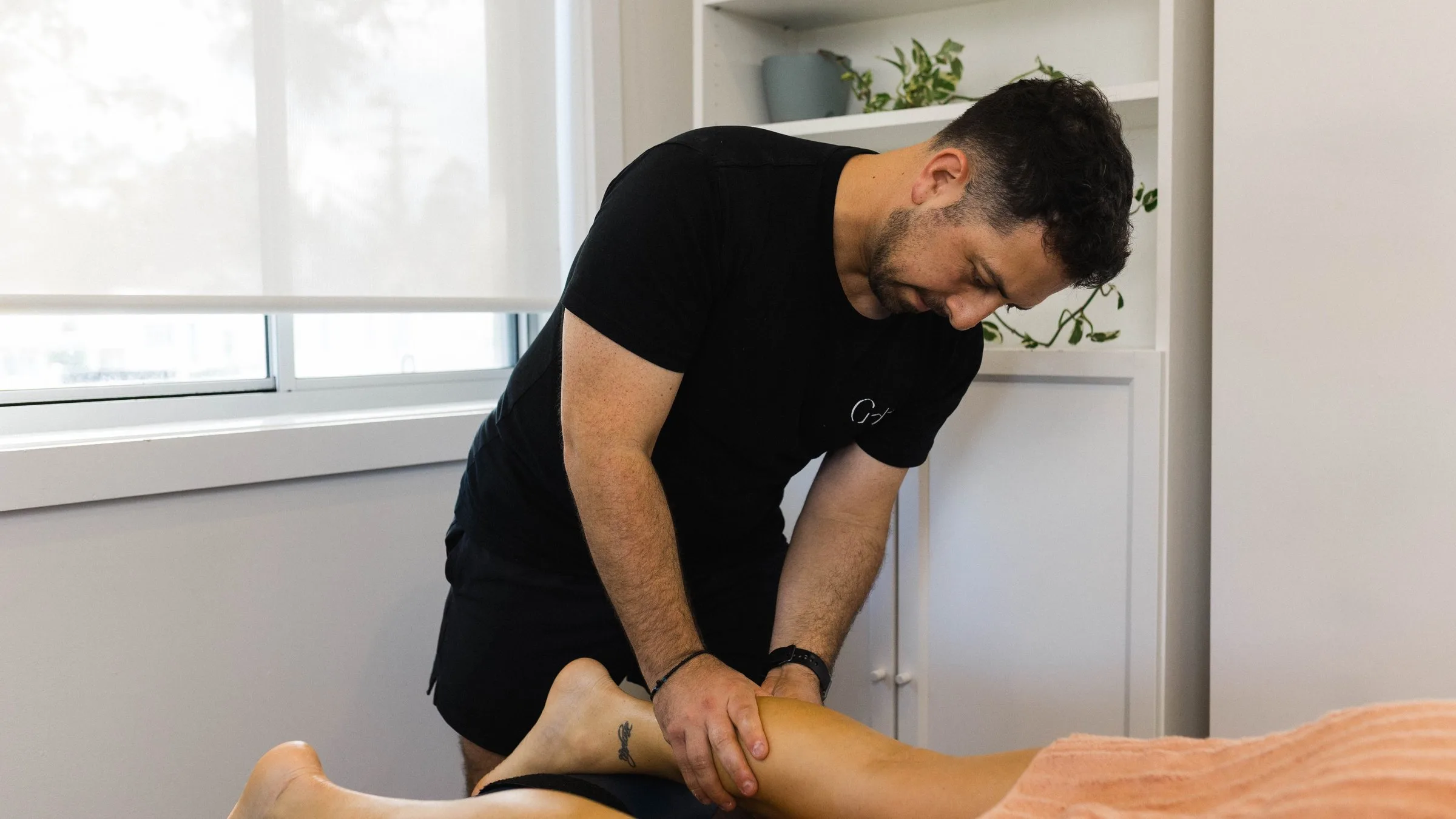
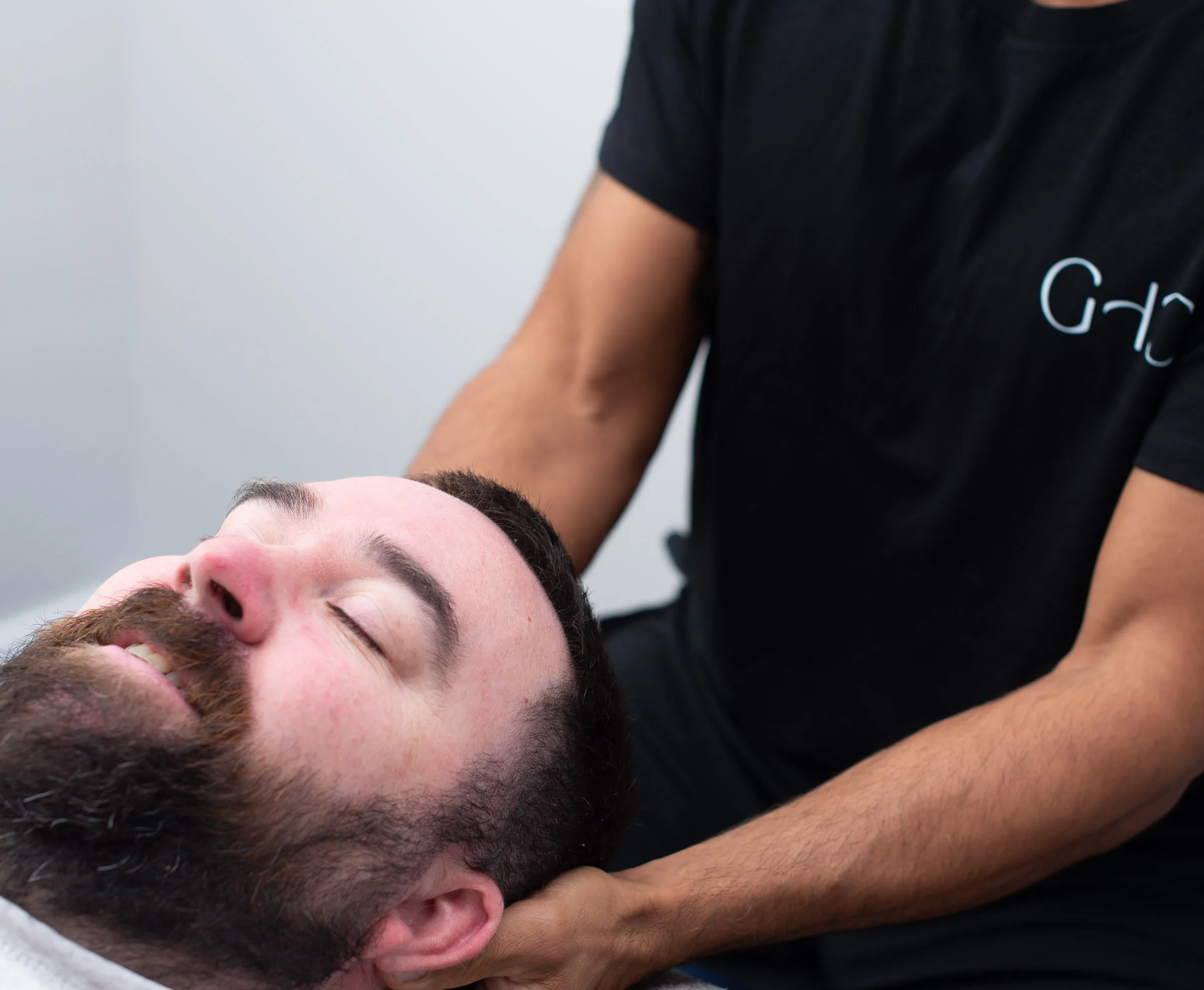
Manual therapy can include joint mobilisation (slow, controlled movements applied to a stiff joint), soft tissue therapy for guarded muscles, and dry needling for stubborn trigger points. Early on, we usually favour gentler techniques. We do not need to crack your neck to help it, and we can work without joint manipulation if you prefer.
There is an important nuance here. The Australian guidance, as described in a peer reviewed paper on whiplash care in general practice, treats manual therapy as something practitioners may use alongside exercise and advice, and only while it keeps producing measurable benefit. Manipulation is not the first line treatment for whiplash. We prefer to say that plainly.
Active Movement and Strengthening
This is the part that carries recovery. The front line recommendations summarised by the Australian Physiotherapy Association are accurate advice, neck specific exercises, and simple pain relief medicines, with dizziness specific exercises and psychological strategies added for people at higher risk of a poor recovery.
In practice, that means a small number of exercises matched to your findings. We start with gentle range of motion work, then retrain the deep stabilising muscles, then build strength and endurance in the neck and shoulder blade muscles. Where dizziness is part of the picture, we add exercises that train head and eye coordination. It all sits within our exercise rehab approach, and we do not publish sets and reps because the right dose depends on how your neck is behaving.
Education and Joined Up Care
Understanding what is happening is treatment in its own right. We explain why movement helps, how to pace your return to work and driving, and why a flare after a busy day is not a setback. Where stress symptoms or poor sleep are holding things back, we help you connect with your GP or a psychologist, and our physiotherapists are on site if a combined approach suits you.
A Realistic Recovery Timeline
Your plan will depend on how severe your symptoms are at the start, so the figures below are a rough guide only. The guidelines treat the first three months as the acute phase and symptoms beyond that as chronic.
Weeks 1 to 2: protect and keep moving. We settle irritated tissue, explain what to expect, and start gentle movement. Soreness is usually at its most unpredictable here.
Weeks 3 to 6: restore movement and control. Range of motion tends to improve, headaches may start to ease, and we begin retraining the deep neck muscles and shoulder girdle.
Weeks 6 to 12: build strength and return to full activity. Exercises become more demanding and we progress towards driving, desk work, training and sport.
Beyond 12 weeks: reassess. If symptoms persist, we look again at what is driving them and may involve your GP or a clinician with advanced whiplash experience, rather than repeating the same approach.
Do You Need a Scan or Surgery?
In most cases, no. A careful history and examination are enough to guide care, and a validated screening checklist (the Canadian C spine rule) is used to decide who needs imaging for a possible fracture, as the diagnosis report explains. A positive result means imaging, and it is a good example of why red flags come first.
Scans can also mislead. The same guideline work strongly recommends against using X rays or MRI to predict who will recover, because findings did not track outcomes, and it notes that structural changes in the neck are common even in people with no symptoms. Seeing age related change on a report can worry people unnecessarily.
Surgery is rare. It is generally reserved for fractures, instability, or nerve compression that has not settled after a proper trial of conservative care, and that decision sits with your GP or a spinal specialist.
Keeping Your Neck Working Well for the Long Run
Once pain settles, the habits that matter most are the plain ones: keep a short strengthening routine going, vary your positions through the day, and return to driving and sport in steps. Setting your car head restraint close to and level with the back of your head is a simple precaution against a repeat.
We also plan to need you less over time. If you are improving steadily, you do not need endless visits, and we will taper your care rather than keep it going out of habit.
If your neck has not felt right since a crash, or you are not sure whether your symptoms need a doctor first, a proper assessment is the quickest way to find out. Book an assessment with our chiropractors at Gladesville Healthcare, and we will work out what is driving your pain and build a plan around you. You can also call us on (02) 9816 3071.
Frequently Asked Questions
How long does whiplash take to heal?
It varies widely. Around half of people recover quickly, while others take longer, and the guidelines treat the first three months as the acute phase. Your starting pain, disability and stress levels are the best early clues, which is why we measure them.
Is it safe to see a chiropractor after whiplash?
It can be, once red flags and fracture risk have been screened for. We adapt our techniques to your stage of recovery, and we send you to a doctor first when your assessment calls for it.
Will you crack my neck?
Not necessarily. Many people improve with gentle mobilisation, soft tissue work and exercise, and we offer alternatives to joint manipulation if you would rather avoid it.
Should I rest completely?
No. The Australian guidance favours advice to stay active and gradually return to usual activities over prolonged rest, within what your symptoms allow.
Do I need a scan?
Usually not. Imaging is considered when a fracture is suspected, or when nerve signs persist after a good trial of care. Routine scans do not predict recovery.
Why are my headaches and dizziness worse since the crash?
The upper neck can refer pain into the head and affect balance. Dizziness can also come from a concussion or the inner ear, so we assess it carefully and refer you on if needed.
This article is general information only and is not a substitute for personal medical advice. If you are unsure about your symptoms, please speak with your GP or another qualified health professional.